
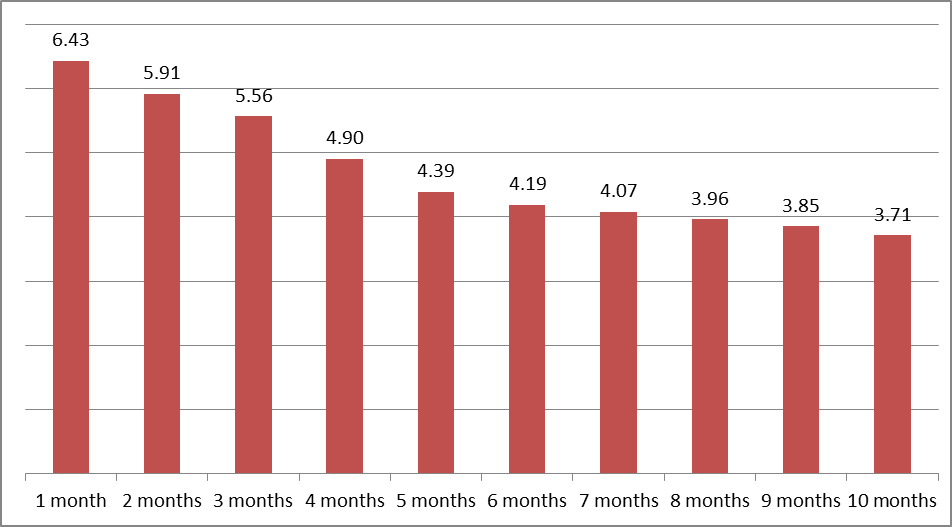
In October 2020, a number of localities across the country implemented an increase in tuition fees for the new school year 2020-2021 according to the roadmap, making the price index of the educational services group increase by 1.52% over the previous month, leading to the overall CPI increase by 0.08%. Floods in central provinces have caused serious damage to people and properties, the loss of crops made the price of fresh vegetables in the whole country in October 2020 increase by 1.86% compared to the previous month, affecting to the overall CPI increase by 0.04%. However, the consumer price index in October 2020 compared to the previous month and compared to December last year only went up by 0.09%, both being the lowest level in the period of 2016-2020; generally, the average CPI in 10 months of 2020 rose by 3.71% over the same period last year. Average CPI growth rate in months tended to decrease, which is a positive sign that the average CPI in 2020 reaching the target set by the National Assembly below 4% is feasible thanks to price management and inflation control have been well implemented.
Average CPI growth rate in 2020 (%)
In last months of the year, the Covid-19 pandemic is likely to continue with complicated siruation, trade wars, uncertain and unpredictable political conflicts in the world… making global economic growth unable to recover. Domestically, the price of pork has gradually gone down because livestock businesses and households are actively re-herding; prices of consumer goods, food and foodstuffs on the market are basically stable due to abundant supplies. Therefore, the average CPI forecast in 2020 will be at 3.5% -4%.
To control inflation according to the National Assembly’s target, we need to continue to maintain a flexible, prudent and proactive price management policy; closely monitor movements of goods supply, demand and prices in order to have solutions to timely stabilize the market.